OUR ARTISANS
We’re proud to have built a strong community of artisans.
From sourcing to packaging - hear from our talented group of artisans who make our world more beautiful each day with their delicate handicraft. Across generations, South Asian artisans have developed systems of making that are deeply rooted in ecology, ritual, and cultural memory. These objects were never designed to be fleeting trends; they were designed to accompany daily life with patience, beauty, and meaning.
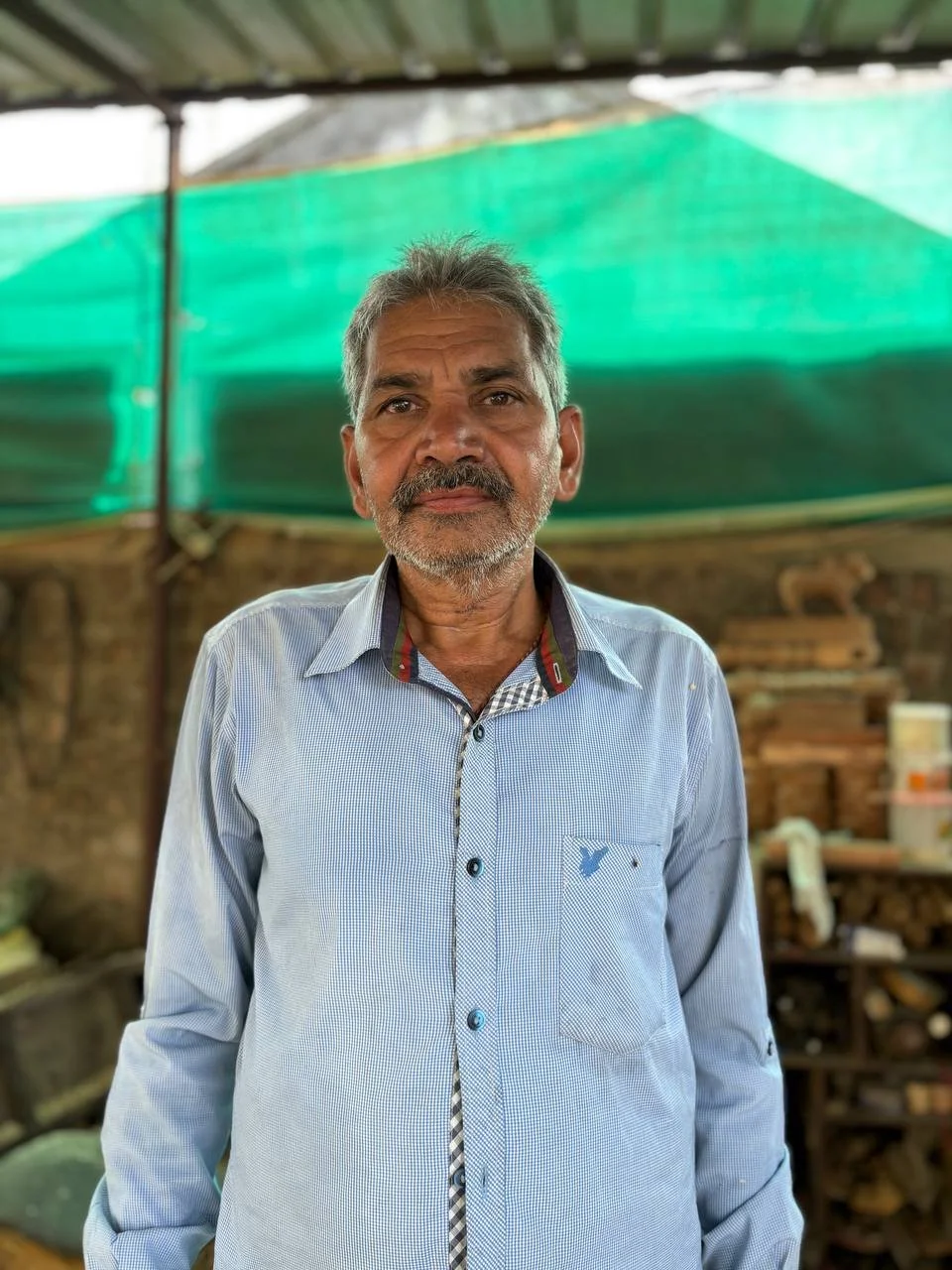
Sarla protects this lineage. We work directly with generational craftspeople in Madhya Pradesh, India, whose knowledge cannot be replicated by machines. We ensure our partners, including master woodcarver Jeewanlal Vishwakarma, set their own pricing, earning fair-trade compensation that sustains their communities and preserves ancestral woodworking traditions.
-
![A man with gray hair and a mustache squatting in a woodworking workshop, surrounded by wood pieces and tools, holding a piece of wood in front of a lathe machine.]()
Jeewanlal Vishwakarma, Woodwork Artisan, Entrepreneur
“I am proud to continue my family owned business, which has been in our family for several generations. We work with different kinds of wood - Sagoon, Shisham, Beeja which we source from the forest depot. We specialise in handmade intricate designs - so anything that requires heavy machinery or is mass produced is something we don’t produce. We believe in carving each piece with perfection, love and care. ”
-
![A woman sitting at a sewing machine in a fabric shop, holding green fabric, with shelves of fabric and sewing materials around her.]()
Rukmani Sharma, Small business owner, Tailor.
“I have been working as a small business owner, Mangalam boutique, for 30 years now. It is my passion and livelihood. I am an expert in all clothing designs and alterations - if you bring me a design I will be able to customise it for you. ”
-
![Indian woman in traditional attire receiving a diploma or certificate from Indian man in a white suit during a formal ceremony, with military personnel in uniform in background.]()
Bhuri Bai
Bhuri Bai belongs to the community of Bhils, the largest tribal group of India. She has won many awards including the highest state honour accorded to artists by the Madhya Pradesh government, the Shikhar Samman. She was awarded India's fourth highest civilian award the Padma Shri in 2021.
-
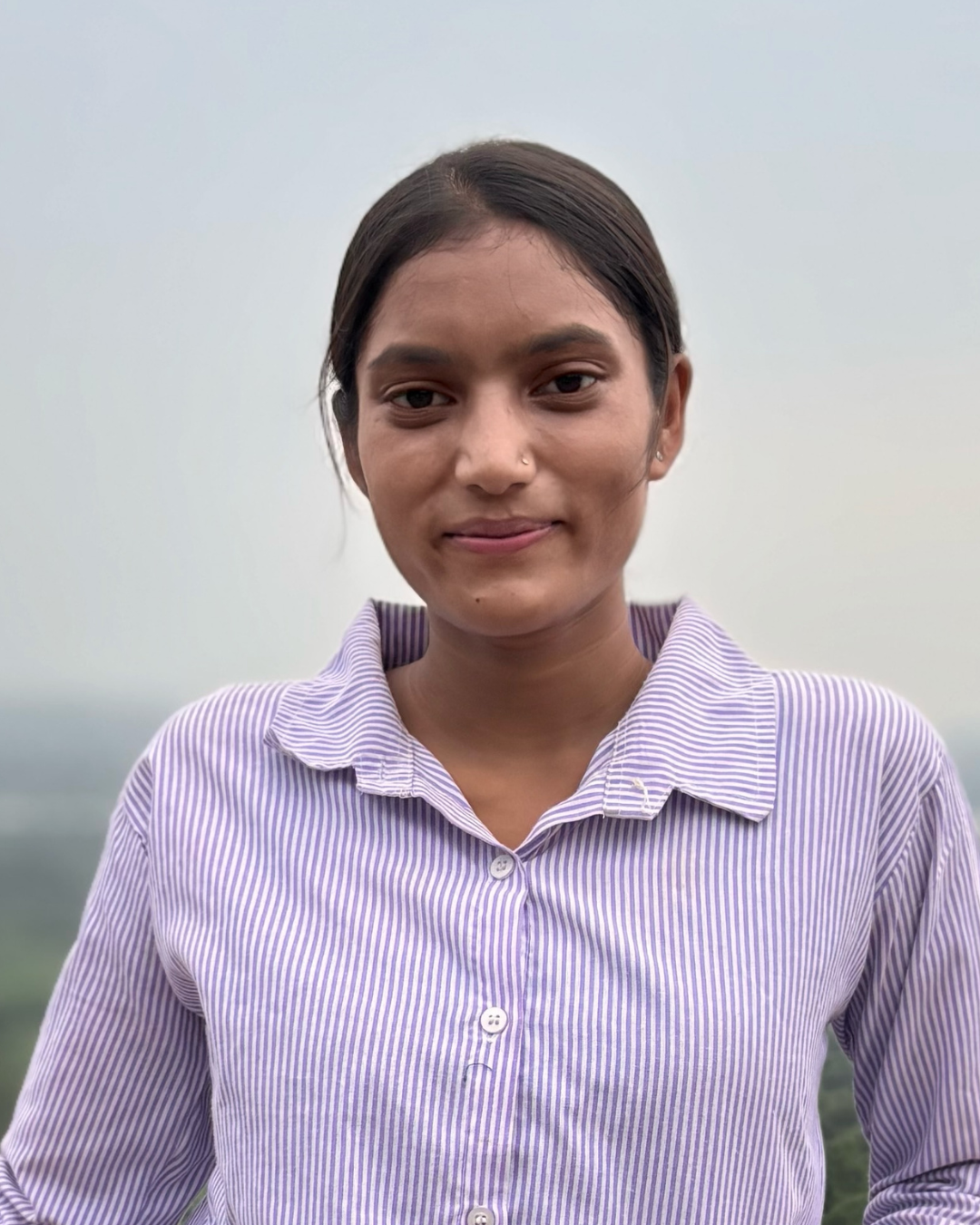
![A girl wearing a blue and white striped shirt and looking into the camera and smiling. She is standing outside below clear blue skies.]()
NIRMALA, BHIL PITHORA ARTIST
Nirmala is a Bhil Pithora artist whose craft has been passed down through generations. She learned from her father (a National Award-winning artist), who learned from his mother (a Padma Shri awardee). Her work is inspired by Bhil traditions, festivities, women of the tribe and their empowerment.
-
![Two men sitting on the floor in front of a blue wall, engaged in traditional painting, with colorful artwork and supplies in front of them.]()
Sher Singh Bhavor, National Award winning artist
“I am proud to be the son of the Padma Shri awardee, Bhuri Bai. She and my father inspired me to become and artist, just like them. I would watch them create designs on the walls and in courtyards during festivals. It inspired me to come up with my own themes like wildlife - peacock, cows, birds; scenes from everyday life and mythological tales.”



BHIL-PITHORA ART
Every little space has been worked by hand. The tiny dots are one of the most recognisable features of Bhil art. They turn simple outlines into something alive and textured. In different Bhil painting traditions, dots have been understood in relation to things such as seeds, rain, crops and the natural world, while the artist's particular dot patterns also become part of their own visual language. It is believed that every living thing carries spirit. Rather than separating humans from nature, Bhil art celebrates their relationship. Every motif tells a story. No two paintings are ever identical. Bhil and related Pithora traditions grew from living community practices. Traditionally, paintings were made directly onto the mud walls of homes, particularly around important occasions, ceremonies, thanksgiving and fulfilled wishes. The walls themselves became a place for stories, devotion, memory and celebration. Natural and locally available materials were used, with painting accompanied by ritual, music, storytelling and community participation.
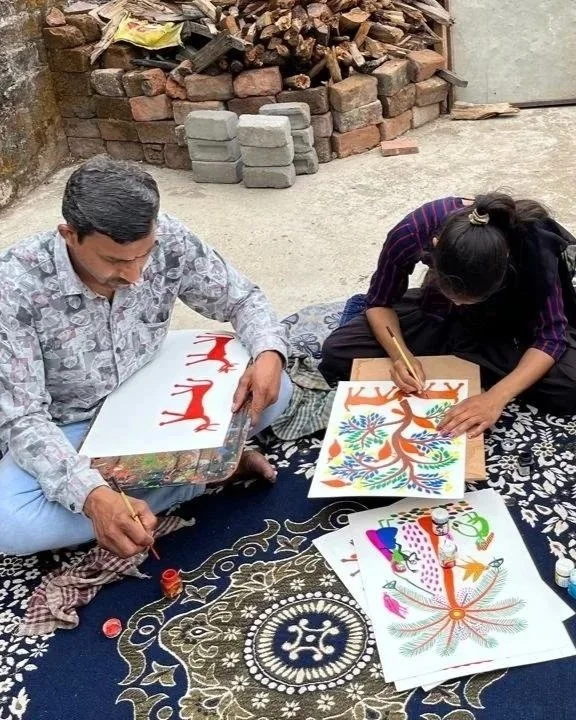
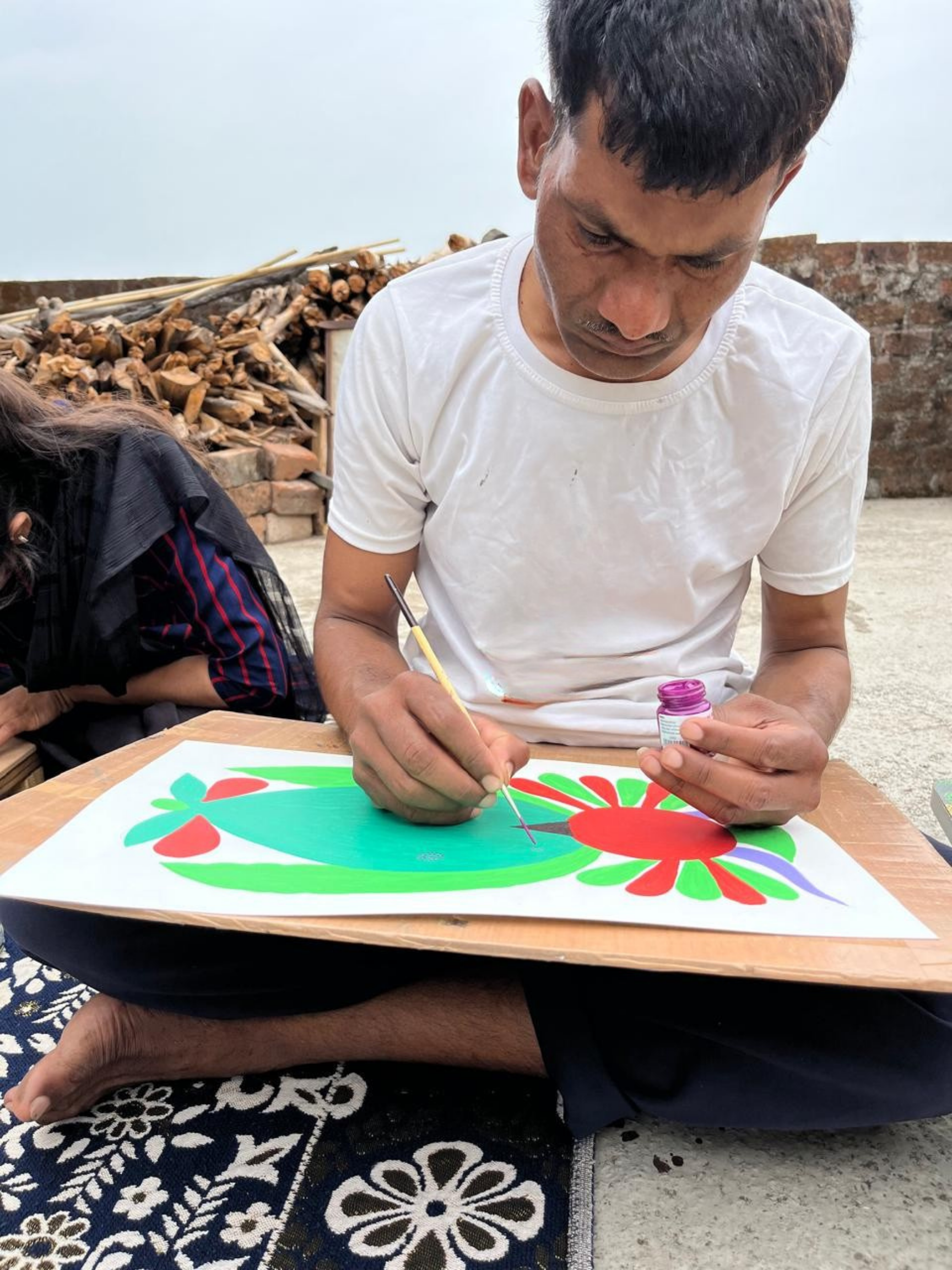
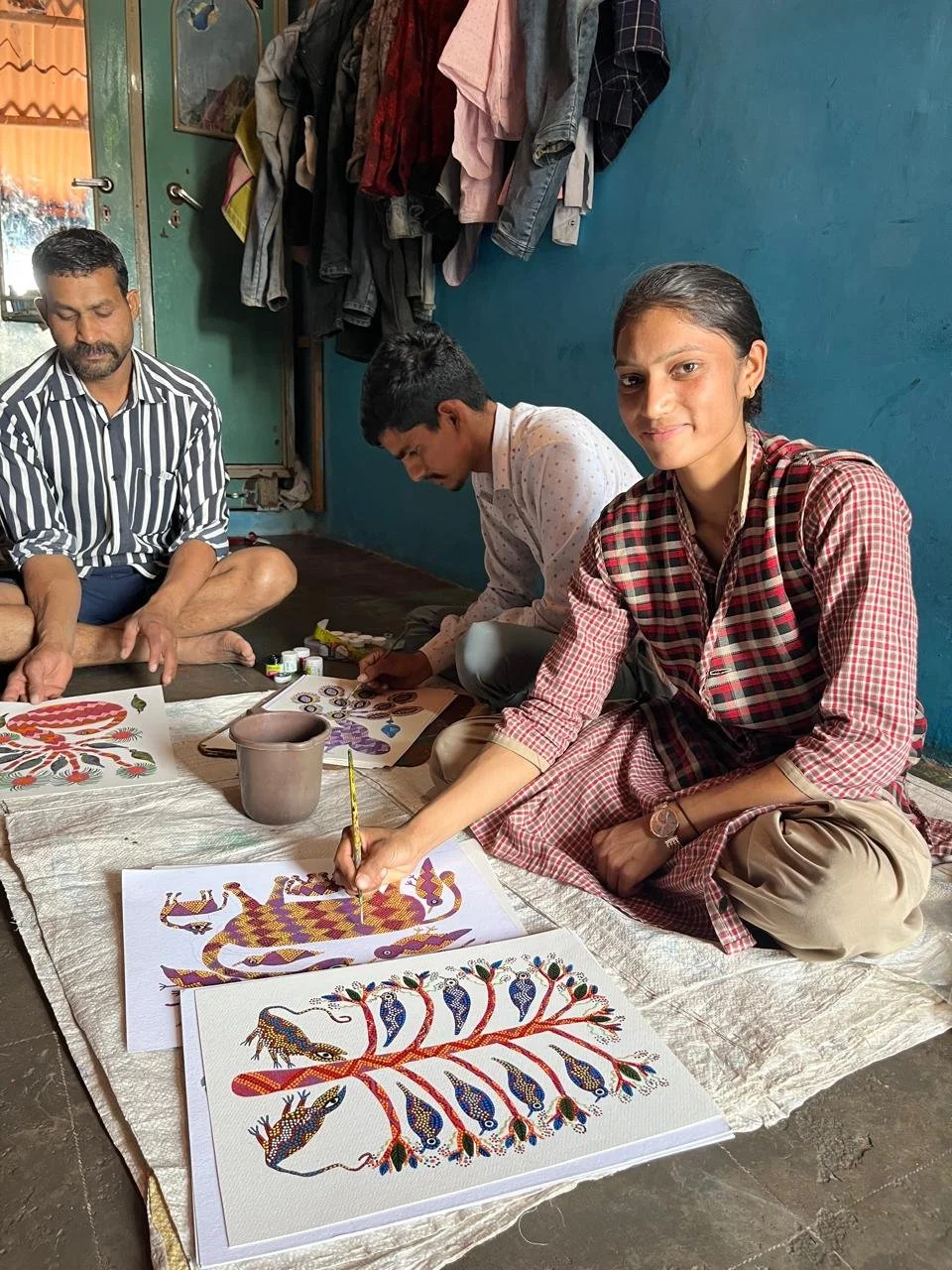
A small window into the living visual language of Bhil communities -. Bhil painting is a centuries-old indigenous art tradition rooted in the communities of central and western India. These paintings serve as ritual maps, offering protection and harmony. The dotting technique is used to represent cellular life, pollen, stars, and continuity. Traditionally painted on mud walls during weddings, births, and harvest festivals as blessings for abundance.
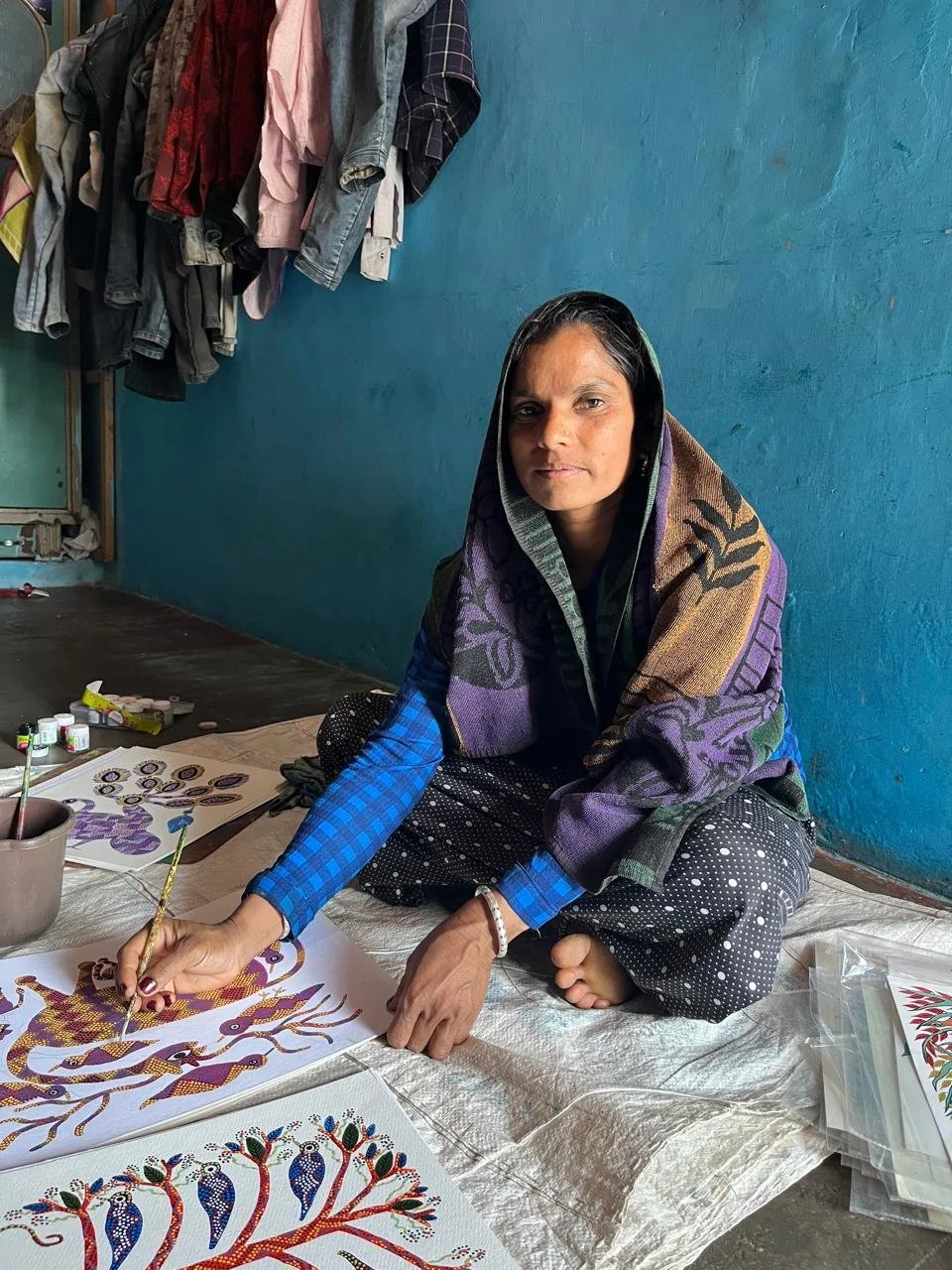
Generations of indigenous hand-painted Bhil-pithora tradition by Sher Singh and his family.
Here, away from the white-cube galleries of the global art world, the ancient traditions of Bhil and Pithora painting are not merely preserved - they are lived out daily. For this remarkable family, art is an inheritance written in soil, seed, and spirit. The matriarch of the household, a celebrated Padma Shri awardee, Bhuri Bai, laid the bedrock for the family's modern legacy, keeping the sacred flame of indigenous wall art alive through decades of shifting times.
Today, that legacy pulses forward through her sons - Sher Singh and Jangal Singh - both esteemed National Award winners, alongside Sher Singh’s wife (Shiva Bai) and daughter (Nirmala Singh Bhabhor), who actively practice and exhibit this intricate craft across the country.
In an exclusive conversation, we sat down with the family to talk about keeping indigenous roots alive, the meditative discipline of the brush, and what it means to carry forward a tradition where no two lines are ever the same.